




America vs Iran: Strengths, Weaknesses, and the Rising Role of Drone Warfare
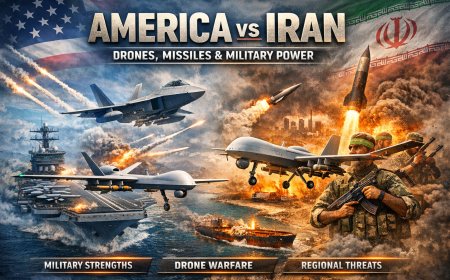
America vs Iran conflict explained: key military advantages, weaknesses, and the growing role of drone warfare shaping modern geopolitical tensions and future war scenarios.

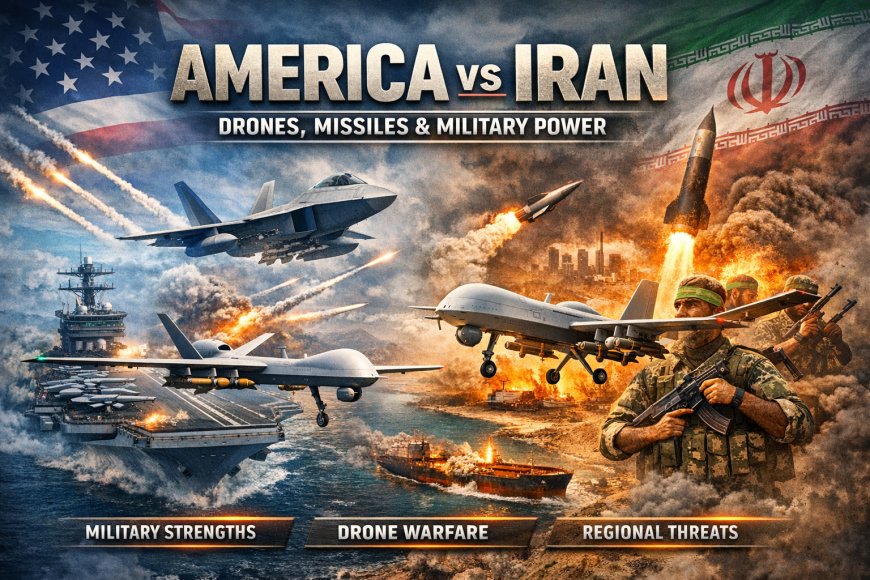
As tensions between the United States and Iran continue to shape Middle East geopolitics, analysts around the world are examining what a direct confrontation might look like. While a full-scale war remains unlikely, understanding the advantages on both sides—especially in modern drone warfare—helps explain why any conflict would be complex, costly, and hard to control.
Iran’s Strategic Advantages
Iran does not compete with the United States in conventional military power. Instead, it has built a strategy designed to offset American superiority through flexibility, geography, and unconventional tactics.
Asymmetric Warfare Expertise
Iran has decades of experience fighting indirectly. Rather than relying on large armies or advanced aircraft, it focuses on missiles, drones, cyber operations, and allied militias. This approach allows Iran to apply pressure without engaging in traditional battlefield confrontations.
Drone Quantity and Cost Efficiency
Iran has developed a large inventory of low-cost, long-range drones used for surveillance, precision strikes, and one-way attack missions. These drones are cheaper to produce and easier to deploy in large numbers, making them effective tools for overwhelming air defenses.
Strategic Geography
Iran’s location near the Strait of Hormuz, a vital global energy corridor, gives it economic leverage. Even the threat of disruption in this region can influence oil prices and global markets, amplifying Iran’s strategic impact beyond the battlefield.
America’s Military Advantages
The United States remains the world’s most powerful military force, with strengths that go far beyond numbers.
Technological Superiority
The U.S. leads in advanced fighter aircraft, missile defense systems, satellites, cyber warfare, and electronic intelligence. This allows American forces to detect, track, and neutralize threats at long distances with high precision.
Global Reach and Logistics
Unlike Iran, the U.S. operates on a global scale. Its network of overseas bases, aircraft carriers, and allies enables rapid deployment, sustained operations, and coordinated defense across multiple regions.
Advanced Drone Integration
American drones are not only weapons but part of a larger intelligence system. They operate alongside satellites, naval forces, and fighter jets, providing real-time battlefield awareness and precise targeting with minimal risk to personnel.
Drone Warfare: The Game Changer
Drone warfare has become a defining feature of modern conflict—and both nations approach it very differently.
Iran’s Drone Strategy
Iran emphasizes quantity over sophistication. By deploying large numbers of drones simultaneously, it aims to exhaust air defenses, gather intelligence, and strike high-value targets at relatively low cost. This makes drones an ideal asymmetric weapon against stronger opponents.
America’s Drone Strategy
The U.S. focuses on precision, endurance, and integration. Its drones are fewer but far more capable, designed for long-range surveillance, targeted strikes, and coordination with other military assets. Recently, the U.S. has also begun developing lower-cost drones to counter swarm tactics.
Who Holds the Advantage?
In a direct military confrontation, the United States holds clear superiority in technology, firepower, and coordination. However, Iran’s ability to spread conflict across regions using drones, missiles, and allied forces makes a quick or “clean” victory unlikely.
The reality is that modern wars are not won by strength alone. They are shaped by endurance, economics, alliances, and public perception. Drone warfare ensures that even weaker powers can challenge stronger ones in new and unpredictable ways.
Final Perspective
A potential America–Iran conflict would not resemble traditional wars of the past. It would be fast, multi-layered, and heavily driven by drones, cyber capabilities, and strategic pressure rather than ground invasions. Understanding both sides’ advantages highlights why restraint, diplomacy, and deterrence remain critical in avoiding a wider regional crisis.
What's Your Reaction?